Congratulations America - Enjoy Your Day - A History of the "Stars and Stripes"
Wishing the American people a great day and a positive outlook for a better future. See below for a history of the American flag.
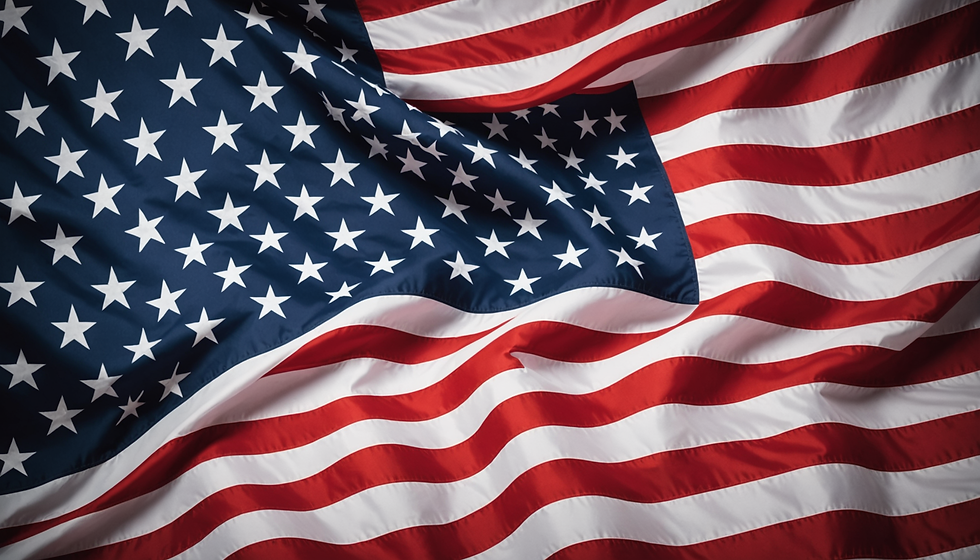
A History of the Stars and Stripes
The American flag has undergone 27 official versions since 1777, each reflecting the growth of the nation. Here's its journey through time:
The First Flags and Early History:
Before the official flag, various colonial flags were used, including the Continental Colors (also called the Grand Union Flag) which featured 13 red and white stripes and the British Union Jack in the canton.
On June 14, 1777, the Continental Congress passed the first Flag Resolution, stating: "Resolved, that the flag of the United States be thirteen stripes, alternate red and white; that the union be thirteen stars, white in a blue field, representing a new constellation."
Betsy Ross and the First Stars and Stripes:
While Betsy Ross is commonly credited with creating the first American flag, historical evidence for this claim is limited. The story gained popularity in the 1870s through accounts shared by her grandson.
The first flag featured 13 stars arranged in a circle, representing equality among the colonies. However, the exact pattern wasn't specified in the resolution, leading to various arrangements.
Evolution of Stars and Stripes:
The 13 stripes have remained constant since 1777, symbolizing the original colonies, except for a brief period between 1795-1818 when 15 stripes were used to represent Vermont and Kentucky joining the Union.
In 1818, Congress passed a law requiring that the number of stars match the number of states, while keeping the 13 stripes permanent. The law also specified that new stars would be added on July 4th following a state's admission.
Notable Versions:
1. 1795-1818: 15-star, 15-stripe flag (inspired "The Star-Spangled Banner")
2. 1848: 30-star flag (after Wisconsin's admission)
3. 1896: 45-star flag (after Utah's admission)
4. 1959: 49-star flag (after Alaska's admission)
5. 1960-present: 50-star flag (after Hawaii's admission)
Symbolism:
- Red symbolizes valor and bravery
- White represents purity and innocence
- Blue signifies vigilance, perseverance, and justice
- The 50 stars represent the current states
- The 13 stripes represent the original colonies
Flag Code and Protocol:
- The U.S. Flag Code was adopted in 1942, establishing guidelines for display and respect
- The flag should be illuminated if displayed at night
- The flag should never touch the ground
- Worn flags should be properly retired through ceremonial burning
Cultural Impact:
The American flag has become a powerful symbol of national identity, appearing in:
- Art (like Jasper Johns' flag paintings)
- Music ("The Star-Spangled Banner")
- Historic moments (raising the flag at Iwo Jima)
- Space exploration (planting the flag on the moon)
Modern Usage:
The flag continues to evolve in its cultural significance while maintaining its basic design elements. It appears in various contexts:
- Government buildings
- Schools
- Military uniforms
- International events
- National celebrations
The American flag remains one of the most recognizable national symbols worldwide, representing the ideals of democracy, freedom, and unity that the United States strives to uphold.


Comments